The hunting of the woodcock in Hungary has a long tradition stretching back several centuries. Bagging this remarkable bird is considered a highly valued, handsome and commendable achievement among hunters, and the woodcock is also known in hunting circles as the queen of the forests. In the 19th century, hunting the bird was a social event at the aristocratic level.
The woodcock breeds in the temperate parts of Eurasia and migrates south to winter. Its natural habitats are coniferous forests, temperate forests and scrubland, as well as farmland. In Hungary it is a regular breeder, but migrating individuals are also observed between March and April, and between September and October. It inhabits mixed forests with dense, damp undergrowth.
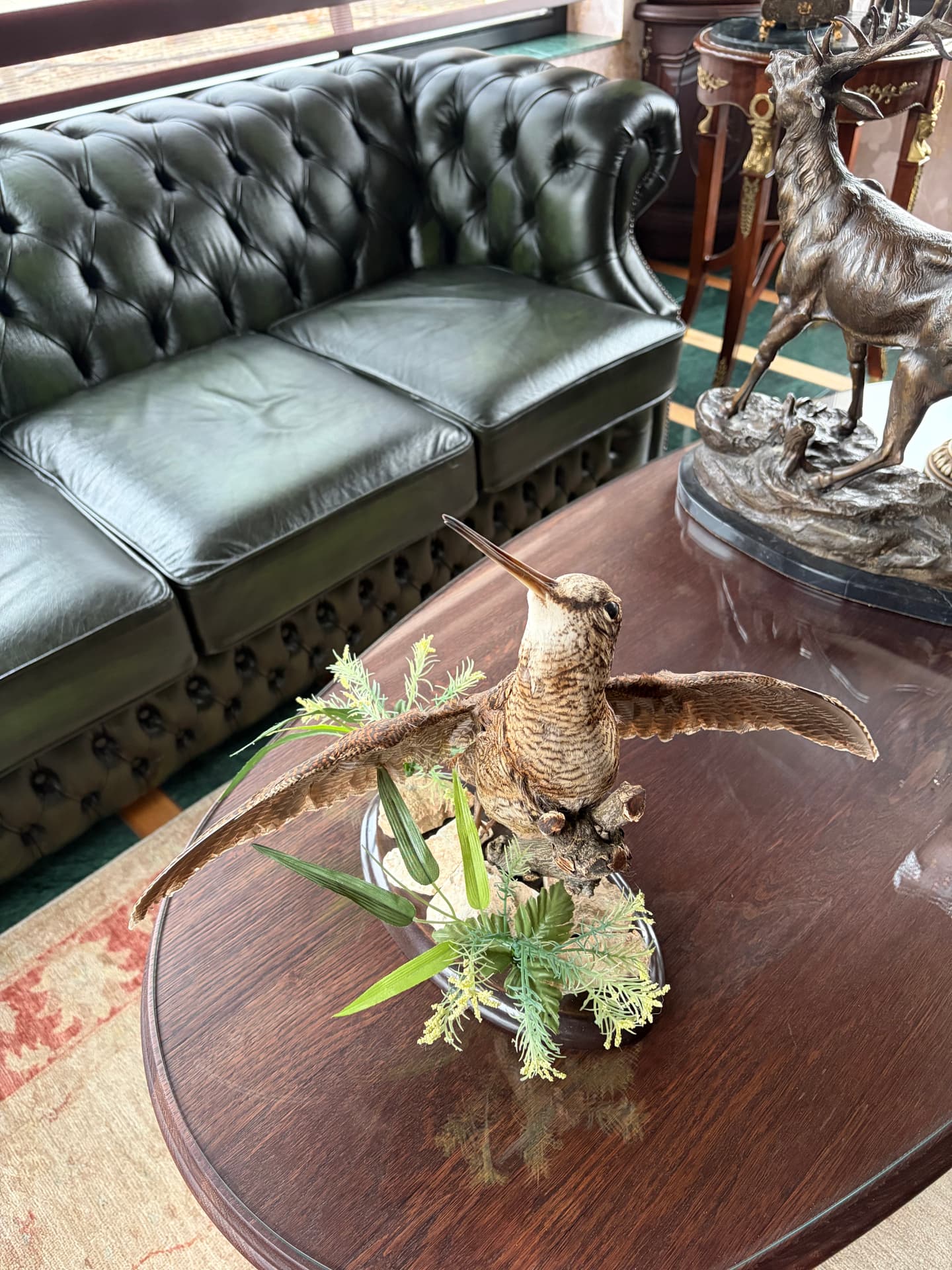
The Eurasian woodcock measures 30–35 centimeters in length, has a wingspan of 56–60 centimeters, and weighs between 130 and 420 grams. It walks about picking small insects off the ground, or probes the soil with its bill in search of worms.
It has a unique, special ability used when feeding. Its bill is suited to grasping worms in the soil. Tactile corpuscles in the bill help it locate prey. Once the signal reaches the brain, the tip of the bill opens, closes around the worm and swallows it without withdrawing the bill from the ground.
The woodcock’s mating ritual takes place at dusk. The males fly around at the edges of forests, in valleys and in clearings, making the distinctive sounds characteristic of the season. The females listen to them from down on the ground. When they become aroused, they give a soft calling note and spread their tail feathers. The white tips of the tail feathers glow in the dark like a signal. The male sees and hears the female and flies down next to her. He often manages to mate with several females. The female hides her nest, lined with leaves, in a small hollow on the ground among dense undergrowth. The clutch consists of 4 eggs, which she incubates for 22–24 days. The hatched chicks leave the nest almost immediately and hide among the surrounding vegetation.
According to his hunting diary, Emperor Franz Joseph bagged nearly 900 woodcocks — to be exact, 897.
Bagging a woodcock is a hunting achievement worthy of great recognition for several reasons, which is why it is also called the queen of the forests. Firstly, in Hungary they are often merely “passing guests,” so they mostly fly over our country, quite literally, on a “transit ticket.” Secondly, besides the special feeding adaptation, it has another very unusual trait that makes it even harder to bring down. Over the course of its evolution, its eyes have gradually shifted to the top and sides of the head. As a result, it has a very wide field of vision: 360 degrees. The woodcock can practically see as if its eyes were on the back of its head. It sees both backward and forward, and can even take in its surroundings fairly well with its head lowered, and it uses this ability both for feeding and for its own protection.
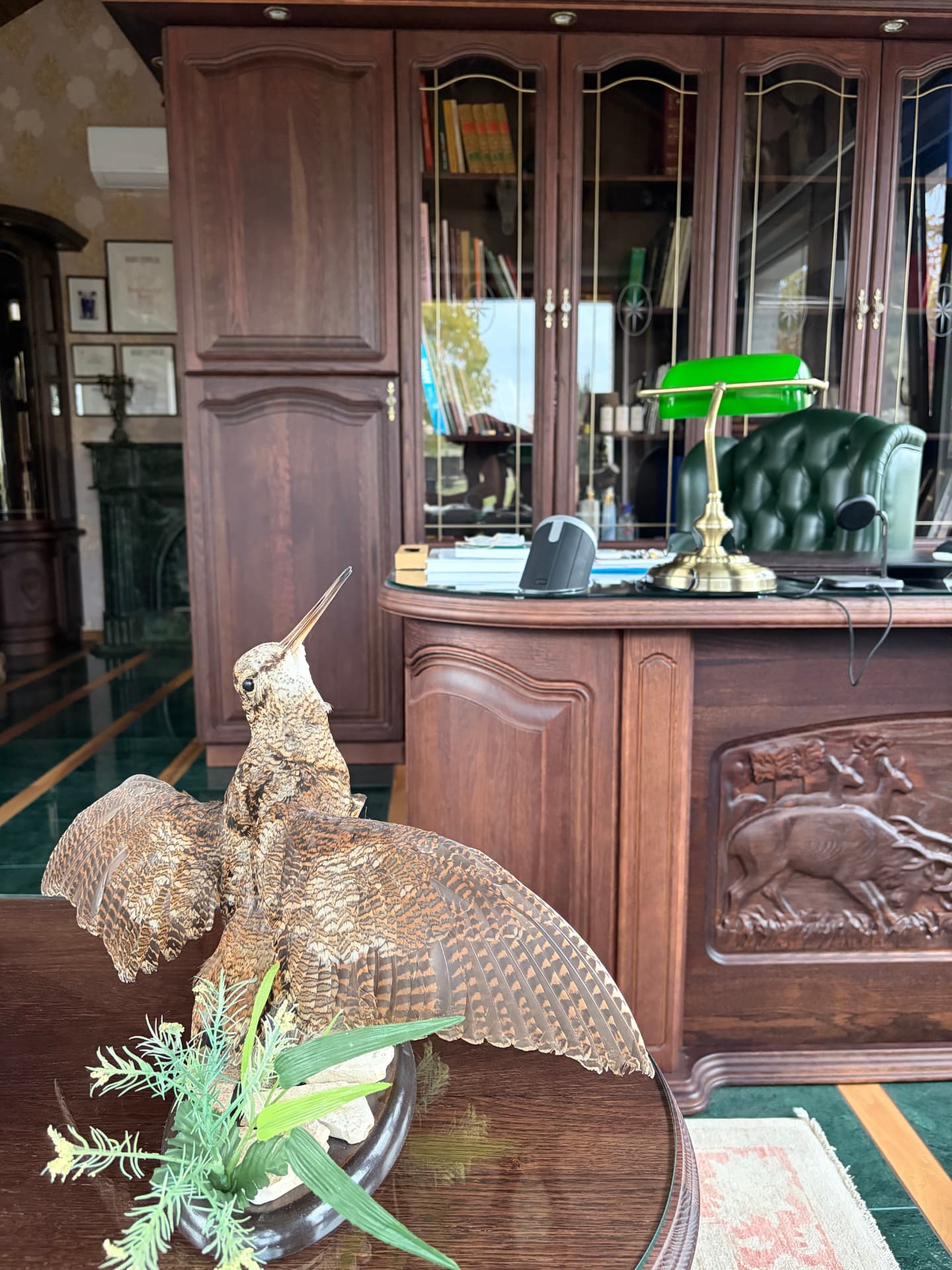
Woodcock hunting is a tradition several centuries old. In the 19th century it was one of Emperor Franz Joseph’s favorite pastimes; according to his hunting diary, he bagged nearly 900 woodcocks, to be exact 897. In that period, woodcock hunting was a significant social event among the aristocracy. In the past, woodcock were hunted in several ways, including during the courtship flight, also called “roding” (húzás). There were drives with dogs, netting, and various trapping methods. Some of these have been banned, and others have become somewhat outdated. Today the woodcock is still hunted during the courtship flight (roding) or during migration. For the latter, it helps if the hunter knows where and when the woodcocks are expected to pass through, as well as the meteorological factors that influence this. Most of those nesting here head toward the Mediterranean. Those passing through our country, setting out from the Baltic region, try to wait out the European winter in Tunisia, traveling via Hungary and Italy.
← All articles